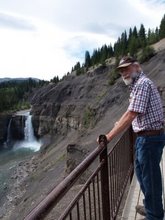

Sundance River near Gilby Hall
I've compiled a comprehensive groundwater report for the Medicine River Watershed based on available water well drilling logs and hydrogeological data from the Alberta Water Well Information Database, Alberta Geological Survey studies, and ongoing monitoring programs.
The report documents the watershed's critical groundwater resources within the Paskapoo Formation and surficial aquifers, highlighting the system's vulnerability after nine consecutive years of drought. Key findings include 6,706 documented wells (255 water wells), fresh groundwater quality (TDS <4,000 mg/L), and strong groundwater-surface water connectivity supporting Sylvan Lake, Gull Lake, and baseflow to the Medicine River.
The assessment identifies sustainability challenges including drought stress, development pressure, agricultural intensification impacts, and petroleum infrastructure contamination risks. Comprehensive recommendations address enhanced monitoring, adaptive water management policies, source water protection, and collaborative stewardship approaches essential for long-term groundwater sustainability.
- https://rdrwa.ca/wp-content/uploads/2020/10/rdr_sowr_4_05_medicine1.pdf
- https://www.aer.ca/data-and-performance-reports/activity-and-data/lists-and-activities/general-well-data
- https://mightypeacewatershedalliance.org/wp-content/uploads/2023/03/MPWA_Regional_Hydrological_Assessment.pdf
- https://ags.aer.ca/document/REP/REP_96.pdf
- https://www.alberta.ca/alberta-water-well-information-database
- https://medicineriverwatershed.ca
- https://rdnewsnow.com/2025/07/26/central-alberta-join-forced-to-protect-medicine-river-watershed/
- https://groundwater.alberta.ca/waterwells/d/
- https://rdrwa.ca/2025/11/12/rdrwa-releases-first-phase-of-its-state-of-the-watershed-report/
- https://medicineriverwatershed.ca/activities/
- https://www.albertafarmexpress.ca/news/where-to-find-well-water-resources-in-alberta/
- https://open.alberta.ca/dataset/b2fb39c4-2b31-403f-8ac8-d0c3633130b4/resource/a0091970-a456-42f0-830a-9cae42acff73/download/eckville-medicine-2006-study.pdf
- https://medicineriverwatershed.ca/resources/
- https://www.ponokacounty.com/uploads/2/6/9/1/26912724/regional_groundwater_report.pdf
- https://libguides.ucalgary.ca/c.php?g=255401&p=1705346
- https://open.alberta.ca/dataset/6e406c84-ecc3-47b2-9870-0daf3c8449a5/resource/b6c1e4dd-e761-487c-b62b-32d8ee37c129/download/epa-watershed-resiliency-restoration-program-grant-factsheet-2024-25.pdf
- https://ags.aer.ca/document/ESR/ESR_1965_04.pdf
- https://seawa.ca/assets/media/documents/publications/SEAWA-Report-on-Water-Monitoring-in-the-SSR-Sub-basin_web_enabled_May8.pdf
- https://brbc.ab.ca/the-watershed
- https://www.rockyview.ca/Portals/0/Files/Agriculture/RVC-Groundwater-Study.pdf
- https://creekwatch.ca/wp-content/uploads/2024/03/2023-Medicine-River-Water-Quality-Data.pdf
- https://ags.aer.ca/document/OFR/OFR_2013_08.pdf
- https://waterportal.ca/alberta-groundwater-resources/
- https://gin.geosciences.ca/service/api_ngwds:gin2/en/data/standard.hydrogeologicunit.html?id=75
- https://health-infobase.canada.ca/pesticides/water-monitoring/
- https://open.alberta.ca/dataset/alberta-water-well-information-database
- https://rdrwa.ca/wp-content/uploads/2023/03/Pres-014A-MRWS-PPP-Pres-slides-230322-RDRWA-Spring-Forum-108-1.pdf
- https://cdnsciencepub.com/doi/10.1139/E08-069
- https://ags.aer.ca/document/OFR/OFR_2009_02.pdf
- https://mightypeacewatershedalliance.org/wp-content/uploads/2023/03/geology2.pdf
- https://open.alberta.ca/dataset/64af094c-e747-49a4-bb4c-40913ad326cd/resource/4dee5ba0-7518-47b7-a421-d867a6e4d97c/download/guideindicatorsstatewatershed-oct2012.pdf
Groundwater Assessment Report: Medicine River Watershed, Central Alberta
Prepared for: Medicine River Watershed Society and Stakeholders
Report Date: November 18, 2025
Watershed Location: Central Alberta (Red Deer River Basin, WSC Code 05CC)
Study Area: 5,933 km² Medicine–Blindman Subwatershed
Executive Summary
The Medicine River watershed represents a critical groundwater resource in central Alberta, encompassing 5,933 km² within the upper Red Deer River basin[4]. This report synthesizes available water well drilling data, hydrogeological assessments, and monitoring information to characterize groundwater conditions, aquifer systems, and sustainability challenges facing the watershed. The region hosts approximately 6,706 documented wells (including 4,504 active wells) and relies predominantly on the Paskapoo Formation as its primary bedrock aquifer[1]. After nine consecutive years of drought conditions, groundwater resources face increasing pressure from municipal, agricultural, and industrial demands[7].
Key findings indicate the watershed's groundwater system consists of surficial Neogene-Quaternary sediments overlying Paleocene-age Paskapoo Formation bedrock aquifers, with well densities reaching 40 wells/km² near population centers such as Eckville and Benalto[1]. Water quality monitoring demonstrates generally healthy baseline conditions, though nutrient loading from intensive livestock operations and land use pressures warrant continued surveillance[1][21].
1. Watershed Setting and Context
1.1 Geographic and Hydrologic Context
The Medicine River watershed is located in the northwest portion of the Red Deer River basin, spanning portions of Clearwater, Lacombe, Ponoka, and Red Deer counties[7]. The watershed extends from the Lower Foothills in the west to the Dry Mixedwood ecoregion in the east[1]. The Medicine River joins the Red Deer River downstream of Gleniffer Lake, with a mean annual flow of 4.6 m³/s measured at Eckville (WSC station 05CC007)[4].
The subwatershed is characterized by a subhumid continental climate with mean May-September temperatures ranging from 11-13°C and total annual precipitation of 350-465 mm[1]. Approximately two-thirds of annual precipitation falls between May and September, with June and July representing the wettest months[1]. This precipitation pattern, combined with extended drought conditions since 2016, significantly influences groundwater recharge dynamics[7].
Major surface water features include the Medicine River, Lobstick Creek, Welch Creek, Rainy Creek, and Black Creek, along with significant water bodies such as Sylvan Lake, Gull Lake, and Medicine Lake[4]. The ratio of catchment area to lake area for both Gull and Sylvan lakes (approximately 2.6 and 2.4, respectively) suggests strong groundwater-surface water connectivity[4].
1.2 Climate and Hydroclimate Challenges
The watershed currently faces significant hydroclimatic stress following nine consecutive years of drought conditions[7]. Regional observers report noticeably lower water levels throughout the watershed, with particular concern for the Medicine River's behavior as "more of a lake than a river" due to its non-mountain, non-snowfed character that makes it highly responsive to drought[7].
Mean annual precipitation ranges from 350-465 mm across the watershed, with regional precipitation averaging 452.9 mm/year (range 418.8-487 mm/year) based on Environment Canada climate normals for 1981-2010[24]. Regional evapotranspiration averages 17.7 mm/year[24], though actual evapotranspiration likely exceeds this value significantly during growing seasons.
2. Geological Framework
2.1 Bedrock Geology
The bedrock geology of the Medicine River watershed consists primarily of the Paskapoo Formation, which formed during the Paleocene epoch (56-65 million years ago)[1]. This formation represents the youngest bedrock deposits in the Western Canada Sedimentary Basin and constitutes one of the most intensely utilized bedrock aquifer systems in Alberta[24].
The Paskapoo Formation comprises diverse sandstones, siltstones, mudstones, and minor shale deposits deposited in nonmarine, fluvial environments[1][22]. The formation displays significant vertical and lateral heterogeneity, with thickness ranging from 0 to 800 m across the broader region, with maximum thickness occurring in western portions near the foothills[24].
2.2 Hydrostratigraphic Units
The Paskapoo Formation has been subdivided into three distinct hydrostratigraphic units[24]:
- Haynes Member (Lower Unit): The lowermost sandstone-dominated unit, correlative with the Haynes aquifer. This unit overlies the uppermost coal seams of the Scollard Formation and represents a productive aquifer zone.
- Lacombe Member (Middle Unit): A regionally extensive mudstone- and siltstone-dominated unit that functions as an aquitard (Lacombe aquitard), providing vertical confinement to underlying aquifers.
- Sunchild Member (Upper Unit): The uppermost sandstone-dominated unit (Sunchild aquifer, also known as Dalehurst aquifer), representing the most commonly accessed aquifer for domestic and municipal water supplies.
Below the Paskapoo Formation lies the Scollard Formation (Cretaceous to Paleogene age), consisting of nonmarine feldspathic sandstone, mudstone containing bentonite, and coal beds[22]. This formation functions as a mixed aquifer-aquitard system and is occasionally targeted for water supply where the Paskapoo is thin or absent.
2.3 Surficial Geology
Unconsolidated Neogene-Quaternary (N-Q) sediments unconformably overlie the Paskapoo Formation bedrock[4]. These surficial deposits include:
- Coarse-grained sand and gravel deposits, particularly within buried valley systems
- Glacial till of variable thickness and composition
- Glaciolacustrine deposits dominated by silt and clay
- Ice-contact deposits and moraine materials
- Alluvial sediments associated with modern drainage systems
Surficial sediment thickness in the region averages 14.5-15.1 m, though significant variations occur, particularly within buried bedrock valley systems where thicknesses may exceed 50 m[24]. These coarse-grained basal deposits within buried valleys represent economically viable aquifers and are informally referred to as the "Red Deer basal aquifer"[4].
The surficial hydrostratigraphy north of Red Deer has been mapped into distinct units (S1, S2, C1, C2), with the S1 unit representing important domestic water sources[4]. Sand and gravel deposits closer to ground surface provide enhanced recharge pathways and support higher-yielding domestic wells.
3. Hydrogeological Framework
3.1 Aquifer Systems
The Medicine River watershed contains multiple aquifer systems operating at different scales:
3.1.1 Surficial Sediment Aquifers
Nonsaline groundwater is sourced from coarse-grained N-Q sediments, particularly those located at the base of buried valley systems[4]. These surficial aquifers are typically unconfined to semi-confined and exhibit hydraulic conductivities ranging from moderate to high depending on grain size distribution and degree of compaction.
Sand and gravel deposits near the surface and outcrop locations facilitate enhanced groundwater recharge[4]. Where fine-grained silt and clay dominate (particularly in glaciolacustrine deposits), hydraulic conductivity decreases substantially, creating aquitard conditions that impede vertical groundwater movement.
3.1.2 Paskapoo Formation Bedrock Aquifers
The Paskapoo Formation represents the primary bedrock aquifer system throughout the watershed. The formation exhibits porous-fractured aquifer characteristics, with groundwater storage and transmission occurring through both primary (intergranular) porosity in sandstone units and secondary (fracture) porosity developed throughout the formation[24].
Hydraulic conductivity values vary widely, ranging from 1×10⁻⁵ to 2.97×10⁻³ m/s (mean approximately 0.00297 m/s), with highest values associated with thick, coarse-grained channel sandstones[24]. Well depths targeting the Paskapoo Formation range from 5 to 378 m, with a mean depth of approximately 45 m[24].
Aquifer confinement varies from unconfined in outcrop areas to semi-confined where overlain by mudstone-dominated aquitard units or thick glacial till deposits[24]. The heterogeneous nature of the formation results in highly variable well yields, with coarse-grained fractured sandstone units providing higher yields while mudstone-dominant facies characteristically produce low-yielding wells[24].
3.2 Groundwater Flow Systems
Groundwater flow in the Medicine River watershed operates at both local and regional scales[4]:
Local-Scale Flow Systems
Local groundwater flow systems develop in both the unconsolidated N-Q sedimentary succession and shallow portions of the Paskapoo Formation[4]. At this scale, groundwater is recharged in topographically elevated upland areas and discharges to adjacent lowland areas, including:
- Medicine River valley
- Blindman River valley
- Sylvan Lake
- Gull Lake
- Tributary creek valleys (Lobstick Creek, Welch Creek, Rainy Creek, Black Creek)
These local flow systems are superimposed upon deeper regional groundwater circulation patterns.
Regional-Scale Flow Systems
Regional-scale groundwater flow circulates through deeper bedrock formations[4]. Groundwater recharge occurs primarily along topographic highs in the western foothills region near the Rocky Mountains and flows eastward through the Paskapoo, Scollard, and deeper formations. This regional flow system contributes baseflow to major river systems and maintains hydraulic connection between the watershed and the broader Red Deer River basin.
Vertical hydraulic gradients and recharge-discharge area mapping completed by previous studies inform understanding of groundwater movement patterns[4]. Upward vertical gradients in discharge areas drive groundwater contribution to surface water features, while downward gradients in recharge areas facilitate infiltration and aquifer replenishment.
3.3 Groundwater Recharge and Discharge
Meteoric recharge (precipitation infiltration) occurs primarily along topographic highs, particularly in western portions of the watershed[24]. Enhanced recharge occurs where coarse-grained surficial sediments or bedrock outcrops provide direct infiltration pathways. Recharge rates are influenced by:
- Precipitation timing and intensity
- Soil moisture conditions and antecedent moisture
- Vegetation cover and land use
- Surficial geology (permeability)
- Topographic position
- Frost depth and frozen ground conditions
Groundwater discharge mechanisms include:
- Contact springs along hillsides and valley slopes
- Diffuse discharge to wetlands, soapholes, and hummocky terrain
- Baseflow contributions to streams, rivers, and lakes
- Direct discharge to the Athabasca River lowlands (regional system)[24]
The strong groundwater-surface water connectivity is evidenced by the low catchment-to-lake-area ratios for Sylvan and Gull lakes, indicating substantial groundwater contribution to lake water budgets[4].
4. Water Well Data Analysis
4.1 Well Inventory and Density
The Medicine River watershed hosts a substantial well inventory documented through the Alberta Water Well Information Database (AWWID)[5]. Available data indicates:
Well Type | Active | Abandoned | Total |
Oil wells | 1,450 | 775 | 2,225 |
Gas wells | 1,883 | 152 | 2,035 |
Water wells | 172 | 83 | 255 |
Other/Unspecified | 999 | 1,192 | 2,191 |
Total | 4,504 | 2,202 | 6,706 |
Table 1: Well inventory summary for Medicine River watershed (Source: AAFC-PFRA, 2008)[1]
The watershed exhibits an average well density of 2.31 wells/km², with significant spatial variability[1]. Well density increases substantially in populated areas:
- Up to 10 wells/km² north and south of Eckville (west and southwest of Sylvan Lake)
- Up to 40 wells/km² near Eckville and Benalto communities[1]
Approximately 67% of all documented wells remain active, with the majority classified as oil wells, followed by gas wells and unspecified purpose wells[1]. Water wells represent only 3.8% of the total well inventory (255 of 6,706 wells), though this likely underrepresents actual domestic water well numbers due to incomplete reporting, particularly for older wells drilled prior to comprehensive registration requirements.
4.2 Well Construction Characteristics
Water well depths targeting the Paskapoo Formation typically range from 5 to 378 m, with mean depths around 45 m[24]. Domestic water wells are commonly completed in the upper Sunchild aquifer where it can be accessed at economical depths. Deeper wells may penetrate through the Lacombe aquitard to access the confined Haynes aquifer or target deeper formations where the Paskapoo is thin.
The Alberta Water Well Information Database (AWWID) contains approximately 500,000 records province-wide, with nearly 4,000 new drilling reports added annually[11][26]. For the Medicine River watershed, available well reports provide information on:
- Well location (legal land description, coordinates)
- Total depth and construction details
- Lithologic descriptions encountered during drilling
- Static water levels and well yields
- Water quality parameters (for reports through 1986)
- Completion methods and casing specifications
4.3 Aquifer Yield Characteristics
Well productivity varies considerably based on hydrogeologic setting. Coarse-grained, fractured sandstone units provide higher-yielding wells, while regions with sandstone volumes lower than the regional average produce lower yields[24]. Wells completed in mudstone-dominant facies characteristically exhibit poor productivity.
The heterogeneous nature of the Paskapoo Formation creates substantial uncertainty in well siting. Successful water well placement requires careful analysis of regional geology, existing well data, and site-specific drilling information to intercept productive sandstone channels.
5. Groundwater Quality
5.1 General Water Quality Characteristics
Groundwater from the Paskapoo Formation is characteristically fresh, with total dissolved solids (TDS) typically below 4,000 mg/L throughout most of the watershed[22][24]. The Paskapoo aquifer system has been mapped for multiple chemical constituents including:
- Major cations: calcium, magnesium, sodium, potassium
- Major anions: chloride, sulphate, bicarbonate
- Total dissolved solids (TDS)
- Total hardness (as CaCO₃)
- Total alkalinity (as CaCO₃)
- Iron concentrations[22]
Regional groundwater quality is generally suitable for domestic, agricultural, and livestock use, though localized variations occur based on aquifer lithology, residence time, and potential contamination sources.
5.2 Surface Water Quality (Proxy for Shallow Groundwater-Surface Water Interaction)
Water quality monitoring conducted through the CreekWatch program provides insights into surface water conditions that reflect shallow groundwater discharge contributions[21]. Medicine River monitoring data from 2023 (29 sampling events, 231 data points) shows median values:
Parameter | Median Value (2023) | Assessment |
Dissolved Oxygen | 8.0 mg/L | Healthy (>5 mg/L guideline) |
pH | 8.0 | Acceptable (6.5-9.0 range) |
Water Temperature | 14.8°C | Suitable (<18°C guideline) |
Turbidity | 10 NTU | Moderate |
Ammonia Nitrogen | 0.25 mg/L | Good (<1.0 mg/L guideline) |
Orthophosphate | 0.02 mg/L | Low |
Chloride | 23 mg/L | Background levels |
Table 2: Medicine River water quality summary, 2023 monitoring data[21]
These parameters indicate generally healthy baseline conditions, with dissolved oxygen, ammonia nitrogen, phosphorus, temperature, and chloride at acceptable levels[21]. Continued monitoring allows detection of temporal trends and assessment of land use impacts on water quality.
5.3 Water Quality Concerns
Previous watershed assessments have identified potential water quality concerns:
Nutrient Loading
Total phosphorus (TP) and total nitrogen (TN) concentrations in some tributaries have exceeded provincial and Canadian water quality guidelines[1]. Black Creek showed TN concentrations of 1.090 mg/L, exceeding both Alberta Surface Water Quality (ASWQ) and Canadian Council of Ministers of the Environment (CCME) Provisional Aquatic Life (PAL) guidelines (0.199 mg/L and 0.082 mg/L, respectively)[1].
Sources of nutrient loading include:
- Surface application of manure from intensive livestock operations
- Agricultural fertilizer application
- More than 30 feedlots/intensive livestock operations, predominantly in the southeastern portion of the watershed[1]
Research demonstrates that streams with high-intensity livestock operations exhibit higher nutrient concentrations, dissolved nutrients, mass loads, fecal bacteria, and total dissolved phosphorus exports compared to streams with medium or low-intensity operations[1].
Industrial Contamination Risks
The watershed hosts extensive oil and gas infrastructure, with 4,260 petroleum wells (active and abandoned) creating potential groundwater contamination pathways[1]. Risks include:
- Groundwater contamination through hydraulic fracturing operations
- Surface casing vent flow and gas migration
- Abandoned well integrity failures
- Produced water disposal and surface spills
- Pipeline crossings and potential leak incidents
Coal bed methane (CBM) operations, while noted in the broader region, pose particular concerns due to large volumes of waste water production (potentially exceeding 65,000 L per day per well) and fracturing-related groundwater contamination risks[1].
The Alberta Energy Regulator maintains daily-updated databases tracking well casing failures, vent flow and gas migration incidents, providing regulatory oversight of potential contamination sources[2].
6. Groundwater-Surface Water Interactions
6.1 Baseflow Contributions
The Medicine River and its tributaries receive substantial baseflow contributions from groundwater discharge, particularly during low-flow periods. The non-mountain, non-snowfed character of the watershed results in rivers that behave "more like lakes," with flow heavily dependent on groundwater contributions rather than alpine snowmelt[7].
This groundwater dependency creates vulnerability during extended drought periods, as reduced recharge translates directly to diminished baseflow and lower surface water levels. Nine consecutive years of drought have stressed this groundwater-surface water connection, with observable impacts on flow regimes[7].
6.2 Lake-Groundwater Connectivity
Both Sylvan Lake and Gull Lake exhibit strong groundwater connectivity based on their catchment-to-lake-area ratios (2.6 and 2.4, respectively)[4]. These ratios indicate that groundwater inflow comprises a significant component of lake water budgets, supplementing direct precipitation and surface runoff contributions.
Previous studies of Sylvan Lake water quality have emphasized the importance of groundwater contributions in lake water balance and water quality dynamics[4]. Changes in groundwater levels or quality can therefore directly affect lake conditions.
6.3 Riparian Health and Springs
Groundwater discharge maintains riparian vegetation health through spring discharge, seepage zones, and elevated water table conditions along valley slopes. Three riparian health assessments conducted in the Medicine River watershed have documented riparian conditions, though specific results are not detailed in available summaries[1].
Contact springs along hillsides represent discrete groundwater discharge points where aquifers intersect topography. These springs provide critical baseflow to tributary streams and support unique riparian and wetland ecosystems.
7. Water Use and Demand
7.1 Municipal and Domestic Use
Domestic water wells constitute the primary groundwater use within the watershed, with 172 active water wells documented[1]. Actual domestic groundwater use likely exceeds documented values, as many older domestic wells predate comprehensive registration requirements.
Communities within the watershed, including Eckville and Benalto, rely partially or entirely on groundwater resources. The high well densities near these population centers (up to 40 wells/km²) reflect concentrated domestic and municipal groundwater demand[1].
7.2 Agricultural Use
Agricultural water demand includes:
- Livestock watering (cattle, hogs, poultry operations)
- Irrigation (limited compared to southern Alberta, but locally significant)
- Feedlot operations (30+ intensive livestock facilities)[1]
- Processing and cleaning water for agricultural facilities
The dominance of agricultural land use throughout the watershed creates diffuse groundwater demand, with many farms operating private domestic wells for both household and agricultural purposes.
7.3 Industrial Use
Oil and gas operations represent substantial industrial water users, though many petroleum wells access saline formations unsuitable for other uses. Industrial demands include:
- Hydraulic fracturing water requirements
- Enhanced oil recovery operations
- Drilling fluid preparation
- Industrial facility water supplies
The extensive petroleum well inventory (4,260 oil and gas wells) indicates significant historical and ongoing industrial activity, though water consumption data specific to the Medicine River watershed is not readily available in compiled format[1].
8. Threats and Sustainability Challenges
8.1 Drought and Climate Stress
The watershed faces its most immediate threat from extended drought conditions. Nine consecutive years of drought (2016-2024) have resulted in:
- Reduced groundwater recharge from diminished precipitation
- Lower static water levels in domestic wells
- Decreased baseflow to rivers and streams
- Stressed riparian and wetland ecosystems
- Increased water use conflicts among competing users[7]
Regional observers report noticeably lower water levels throughout the system, with particular concern for sustained low-flow conditions in the Medicine River itself[7]. The watershed's vulnerability to drought stems from its non-mountain character and dependence on local precipitation for recharge rather than alpine snowmelt.
8.2 Development Pressure and Population Growth
The Paskapoo Formation aquifer system faces increasing development pressure[24]. Population growth in central Alberta, particularly around Red Deer and satellite communities, drives:
- Increased domestic groundwater extraction
- Rural residential development (acreages) with individual wells
- Expanded municipal water supply demands
- Infrastructure development potentially impacting recharge areas
8.3 Agricultural Intensification
Intensive livestock operations and agricultural practices create multiple groundwater sustainability concerns:
- Nutrient loading to shallow aquifers and surface water
- Pathogen contamination risks near feedlots
- Increased water demand for livestock operations
- Land use changes affecting recharge and runoff patterns[1]
The concentration of more than 30 feedlots/intensive livestock operations in the southeastern portion of the watershed creates localized zones of elevated contamination risk[1].
8.4 Industrial Contamination Risks
The extensive inventory of 6,706 wells (including 2,202 abandoned wells) presents ongoing contamination risks[1]. Specific concerns include:
- Abandoned well integrity failure providing contamination pathways
- Surface casing vent flow and gas migration incidents
- Hydraulic fracturing impacts on shallow aquifers
- Produced water and drilling waste disposal
- Pipeline leaks and surface spills affecting recharge areas
The Alberta Energy Regulator tracks 13+ well casing failures requiring remediation in the broader region, though watershed-specific failure data is not comprehensively reported[2].
8.5 Knowledge and Data Gaps
Significant knowledge gaps constrain effective groundwater management:
- Limited real-time groundwater level monitoring (no dedicated GOWN network wells reported in watershed)
- Incomplete water well database (older wells, exempt wells not captured)
- Limited understanding of total groundwater extraction rates
- Insufficient data on aquifer recharge rates and sustainability
- Incomplete mapping of buried valley aquifer systems
- Limited water quality monitoring in bedrock aquifers
- Inadequate understanding of cumulative impacts from multiple stressors
9. Monitoring and Data Sources
9.1 Alberta Water Well Information Database (AWWID)
The AWWID represents the primary data source for groundwater information, containing approximately 500,000 records province-wide with 4,000-5,000 new records added annually[5][26]. The database provides:
- Water well drilling reports
- Chemical analysis reports (through 1986)
- Geophysical logs
- Spring locations
- Flowing shot holes
- Test holes
- Pump test data[5]
Users can access individual well records, print reconnaissance reports, and download the entire database through the interactive web mapping interface at groundwater.alberta.ca[8]. Wells are searchable by legal land description, owner name, GIC well ID, GOA well tag number, or spatial selection tools[8].
9.2 Surface Water Quality Monitoring
The Medicine River Watershed Society partners with the Red Deer River Watershed Alliance to conduct annual water quality monitoring[10][21]. The 2023 monitoring program included:
- 29 sampling events
- 231 individual data points
- 15.5 hours of sampling effort
- Four primary monitoring locations (Highway 53, Rainy Creek Road, Range Road 25, Highway 54)[21]
Monitoring occurs during the open water season (approximately April through October) using CreekWatch Laboratory Kits to analyze dissolved oxygen, temperature, pH, turbidity, ammonia nitrogen, orthophosphate, and chloride[21]. This community-based monitoring program provides essential baseline data and temporal trend information.
9.3 Groundwater Observation Well Network (GOWN)
Alberta's Groundwater Observation Well Network includes 306 monitoring wells province-wide that track groundwater levels and quality parameters[23]. While no specific GOWN wells within the Medicine River watershed are identified in available documentation, the broader central Alberta region includes monitoring wells that provide regional context.
Regional technologists in Red Deer and Edmonton maintain wells, download data, take manual readings, and archive information into the GOWN database[23]. Historical groundwater level information is publicly accessible through the Alberta Environment website.
9.4 Geological and Hydrogeological Mapping
The Alberta Geological Survey (AGS) has conducted extensive geological and hydrogeological mapping covering the Medicine River watershed region, including:
- Numerical groundwater flow modeling of the Sylvan Lake Subbasin (which overlaps the Medicine River watershed)[4]
- Regional bedrock aquifer characterization studies
- Surficial geology and buried valley mapping
- Hydrostratigraphic unit delineation[4][22]
These mapping products provide critical context for understanding aquifer distribution, flow patterns, and water availability at regional scales.
10. Recommendations
10.1 Enhanced Monitoring and Data Collection
- Establish dedicated GOWN monitoring wells: Install continuous water level monitoring equipment in representative wells accessing both surficial and Paskapoo aquifers to track seasonal and long-term trends.
- Expand water quality monitoring: Supplement surface water monitoring with groundwater quality sampling at strategic locations, targeting areas near intensive livestock operations and petroleum infrastructure.
- Improve well database completeness: Encourage reporting of exempt domestic wells and verify historical well records to improve understanding of total groundwater extraction.
- Implement aquifer testing programs: Conduct systematic pumping tests in representative hydrogeologic settings to refine aquifer parameters and sustainable yield estimates.
- Develop flow monitoring for groundwater-fed tributaries: Establish stream gauging at key locations to quantify baseflow contributions and assess drought impacts.
10.2 Water Resource Management and Policy
- Review water allocation regulations: Collaborate with provincial authorities to assess current allocation frameworks and adapt policies for drought resilience and groundwater sustainability[10].
- Develop groundwater management framework: Establish watershed-specific groundwater management objectives, extraction limits, and protection strategies based on aquifer capacity assessments.
- Implement water conservation programs: Promote water-use efficiency in agricultural, municipal, and industrial sectors through incentives, education, and best management practices.
- Establish recharge protection zones: Identify and protect critical recharge areas from development or activities that would reduce infiltration capacity.
- Address drought response protocols: Develop tiered response plans for various drought severity levels, including temporary extraction restrictions during extreme conditions[10].
10.3 Source Water Protection
- Delineate wellhead protection areas: Map capture zones for municipal and community water supplies to enable targeted land use management.
- Enhanced petroleum well monitoring: Coordinate with Alberta Energy Regulator to ensure comprehensive monitoring of abandoned wells, casing integrity, and surface casing vent flow incidents.
- Agricultural best management practices: Promote nutrient management planning, proper manure storage and application, and riparian buffer establishment to reduce contamination risks[1].
- Industrial water alternatives: Encourage oil and gas operators to utilize saline groundwater, produced water recycling, or surface water sources during high-flow periods rather than fresh groundwater.
10.4 Research and Assessment Priorities
- Aquifer sustainability assessment: Conduct comprehensive water balance analysis incorporating recharge estimation, extraction quantification, and climate scenario modeling.
- Buried valley mapping refinement: Improve three-dimensional understanding of buried bedrock valley aquifer systems using geophysical methods and strategic drilling.
- Groundwater-dependent ecosystem inventory: Map and assess springs, seeps, wetlands, and baseflow-dependent stream reaches to understand ecosystem vulnerability.
- Climate change impact assessment: Model projected changes in recharge rates, aquifer levels, and surface water contributions under various climate scenarios.
- Cumulative effects analysis: Assess combined impacts of agricultural intensification, petroleum development, population growth, and climate change on groundwater sustainability.
10.5 Community Engagement and Stewardship
- Expand volunteer monitoring programs: Build upon existing Medicine River Watershed Society and CreekWatch initiatives to increase spatial and temporal monitoring coverage[10][21].
- Well owner education: Promote Working Well program participation to improve well maintenance, contamination prevention, and proper well abandonment practices[11].
- Public awareness campaigns: Increase community understanding of groundwater resources, conservation importance, and drought resilience strategies.
- Multi-stakeholder collaboration: Facilitate dialogue among agricultural producers, municipalities, industry, and environmental groups to develop shared stewardship approaches[10].
11. Conclusions
The Medicine River watershed hosts valuable groundwater resources within surficial sediment aquifers and the Paskapoo Formation bedrock system. These resources support domestic, agricultural, and industrial water needs across 5,933 km² of central Alberta. Current conditions reflect a system under stress, with nine consecutive years of drought testing aquifer resilience and highlighting the critical importance of groundwater to watershed sustainability.
Available data from the Alberta Water Well Information Database documents 6,706 wells, including 255 water wells actively serving communities and rural residents. The Paskapoo Formation aquifer system, ranging from 0 to 800 m thickness, provides the primary source of potable groundwater, characterized by fresh water quality (TDS <4,000 mg/L) and variable but generally adequate yields for domestic purposes.
Water quality monitoring demonstrates generally healthy baseline conditions, though localized concerns exist regarding nutrient loading from intensive agricultural operations and contamination risks from petroleum infrastructure. The strong groundwater-surface water connectivity documented for major lakes and baseflow-dependent streams emphasizes the integrated nature of the watershed's water resources.
Sustainability challenges center on drought impacts, development pressure, agricultural intensification, and industrial contamination risks. Knowledge gaps in groundwater level trends, total extraction rates, and aquifer recharge capacity constrain management effectiveness. Addressing these challenges requires enhanced monitoring infrastructure, adaptive water management policies, source water protection measures, and collaborative stewardship approaches.
The Medicine River watershed's groundwater resources remain fundamentally viable but increasingly vulnerable. Proactive management informed by comprehensive monitoring, sound science, and community engagement will be essential to ensure long-term sustainability for current and future generations.
References
[1] Red Deer River Watershed Alliance. (2009). Medicine subwatershed. In Red Deer River State of the Watershed Report. https://rdrwa.ca/state-of-the-watershed/
[2] Alberta Energy Regulator. (2025). General well data. https://www.aer.ca/providing-information/data-and-reports/statistical-reports/general-well-data
[4] Atkinson, L., Hartman, G., & Pana, D. (2018). Numerical groundwater flow model of the Sylvan Lake subbasin, central Alberta (Open File Report OFR 2018-08). Alberta Geological Survey. https://ags.aer.ca/reports/ofr-2018-08.html
[5] Alberta Environment and Parks. (n.d.). Alberta Water Well Information Database. Government of Alberta. https://www.alberta.ca/alberta-water-well-information-database
[7] RDNewsNow. (2025, July 25). Central Alberta counties join forces to protect Medicine River watershed. https://rdnewsnow.com/
[8] Government of Alberta. (2010). Map view choices - Water wells. https://groundwater.alberta.ca/
[10] Medicine River Watershed Society. (2025). Activities. https://medicineriverwatershed.ca/activities/
[11] Alberta Farm Express. (2020, February 3). Where to find well water resources in Alberta. https://albertafarmexpress.ca/
[21] CreekWatch. (2023). Medicine River water quality data report. RiverWatch Institute of Alberta. https://creekwatch.ca/
[22] MacCormack, K. E., Atkinson, N., & Lyster, S. (2015). Bedrock topography and sediment thickness mapping, Calgary Corridor, Alberta: II – Paskapoo aquifer. Alberta Geological Survey. https://ags.aer.ca/
[23] Alberta Water Portal. (2025). Alberta groundwater resources. https://waterportal.ca/
[24] Boisvert, E., & Rivera, A. (2006). Paskapoo aquifer system. Groundwater Information Network. https://gin.geosciences.ca/
[26] Government of Alberta. (2020). Alberta Water Well Information Database - Open Government. https://open.alberta.ca/


No comments:
Post a Comment