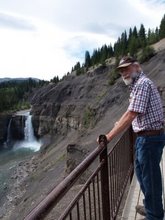
The Red Deer River watershed presents a complex hydrological system that balances numerous demands across a diverse landscape. This river system serves as a critical water source for municipalities, agriculture, industry, and ecological needs in central Alberta. Current water availability in the watershed is influenced by natural geographical features, climate patterns, infrastructure development, and management practices, all of which combine to create both opportunities and challenges for sustainable water use.
Hydrological Characteristics and Water Yield
The Red Deer River spans 740 kilometers from its headwaters in the Canadian Rocky Mountains in Banff National Park to its confluence with the South Saskatchewan River just inside Saskatchewan. The river has a mean annual flow rate of 62 m³/s and drains a watershed that encompasses mountains, foothills, and semiarid prairies5. This diverse landscape creates significant variations in water yield and availability throughout the watershed.
Approximately 30% of the mapped area in the Red Deer River watershed is classified as having moderate to high hydrological significance, with 6% identified as having high hydrological significance1. These hydrologically significant areas are not evenly distributed across the watershed. The headwaters in the Rocky Mountains and foothills have a significantly higher proportion classified as having moderate to high hydrological significance compared to the grassland regions1. This uneven distribution is primarily driven by higher precipitation volumes and larger extents of natural land cover in the mountainous regions.
The watershed can be divided into distinct zones with varying hydrological characteristics:
-
Upper Headwaters: 25% high hydrological significance, 71% moderate-high significance
-
Lower Headwaters: Lower proportions but still significant
-
Central Urbanizing, Central Agricultural, and Dry Grasslands: Decreasing hydrological significance moving eastward, with the Dry Grasslands having just 1% high significance and 25% moderate-high significance1
Water yield patterns further highlight the watershed's hydrological diversity. Over 50% of the total water yield in the Red Deer River originates from snow and rain in the Rocky Mountains and Upper Foothills4. Areas upstream from the confluence of the Blindman River and the Red Deer River near Red Deer contribute over 87% of the total water yield in the entire basin. By the time the river reaches the confluence with the Rosebud River just downstream from Drumheller, over 99% of all stream water in the watershed has already been generated4. This pattern demonstrates the critical importance of the western portions of the watershed for overall water availability.
Seasonal Flow Patterns and Monitoring
The Red Deer River exhibits significant seasonal variability in its flows. At the City of Red Deer, the recorded mean annual discharge is 47.5 m³/s with a contributing drainage area of 11,600 km²12. Annual flow volumes at this location have historically ranged from a high of 4.0 billion m³ in 1954 to a low of 0.66 billion m³ in 1984, with a long-term average of 1.5 billion m³12.
Runoff volumes typically peak in June and July along the mainstem of the Red Deer River, while flow decline usually begins in early to mid-July and continues until winter4. For many tributaries, April snowmelt often dominates the hydrograph, and summer and fall are characterized by very low flows. The Little Red Deer River, for example, shows relatively consistent discharge rates from April to the end of June (ranging from 4-7 m³/s), followed by a decrease to less than 2 m³/s towards the end of October11.
Water Storage and Management Infrastructure
The Dickson Dam, completed in 1984 and located 40 kilometers southwest of the City of Red Deer, represents the most significant water management infrastructure in the watershed14. The dam creates Gleniffer Lake Reservoir and is operated by the Government of Alberta through the Ministry of Agriculture & Irrigation.
The primary purpose of the Dickson Dam is to provide assured water supplies to downstream municipalities, but it also delivers secondary benefits including flood control, improved water quality, recreation opportunities, and hydroelectric power generation14. The dam is also instrumental in helping Alberta meet its water-sharing commitments with Saskatchewan under the interprovincial apportionment agreement14.
Prior to the dam's construction, flows in the Red Deer River dropped to as low as 2 m³/s at the City of Red Deer during winter months. By storing water from spring and summer runoff in Gleniffer Lake Reservoir, operators are now able to maintain a minimum flow of 16 m³/s throughout the year14. This regulated minimum flow significantly improves water quality during winter months and ensures municipalities have adequate water supplies throughout the year.
The dam has proven critical for flood mitigation. During both the 2005 and 2013 flood events, the Dickson Dam reduced downstream peak flows by approximately 30%14. Recent upgrades have increased the dam's capacity to handle high inflows, with a maximum discharge capacity of 6,280 m³/s during major flood events—significantly higher than the largest recorded flow of 1,930 m³/s in 191514.
Despite these benefits, the Red Deer sub-basin has significantly less water storage capacity than other sub-basins in the South Saskatchewan River Basin. Gleniffer Reservoir is the only major storage facility in the basin, making the region more vulnerable to drought conditions8.
Future Infrastructure Development
Recognizing the vulnerability of the Red Deer River basin to drought, the Alberta government announced in 2024 a plan to invest $4.5 million to study a new water reservoir in the Red Deer Basin, specifically near Ardley, a hamlet east of Red Deer city1016. This feasibility study is part of a broader $35 million investment in drought prevention and water management improvements across the province16.
The study represents a "key front-end piece" that will examine reservoir capacity needs, environmental impacts, and projected costs to determine project viability7. This initiative is driven by growing concerns about water security as Alberta's population increases and parts of the province face increasing drought risks.
Water Allocation and Usage
The Red Deer River occupies a unique position within Alberta's water management framework. While other major rivers in the South Saskatchewan River Basin (SSRB)—the Bow and Oldman rivers—have been closed to new water allocations, the Red Deer River remains open for new surface water licenses218. This status makes the river increasingly important for future water development in the province.
Currently, total water allocations from the Red Deer River are approximately 335,000 dam³, representing about 61% of the temporary limit of 550,000 dam³2. The City of Red Deer holds four water allocation licenses totaling 27,428 ML per year but typically withdraws only about 60% of this allocation2. Importantly, in 2014, about 88% of water withdrawn from the river was returned as treated wastewater effluent, indicating a high rate of return flow2.
Water allocations in the Red Deer River basin are distributed across various sectors:
-
Irrigation: 70,431 dam³ (21%)
-
Municipal: 60,369 dam³ (18%)
-
Commercial: 10,062 dam³ (3%)
-
Industrial: 23,477 dam³ (7%)
-
Petroleum: 46,954 dam³ (14%)
-
Stock: 16,769 dam³ (5%)
-
Other: 107,324 dam³ (32%)19
While irrigation represents the largest single sector allocation (21%), this proportion is significantly lower than in other SSRB sub-basins where irrigation accounts for 78-88% of allocations19. This distribution reflects the Red Deer River basin's more diverse water use pattern compared to the heavily irrigation-dominated Bow and Oldman basins.
The management of these allocations follows the principle of "first in time, first in right" (FITFIR), creating a system of senior and junior water licenses18. Water Conservation Objectives (WCOs) established by the province affect water allocations, particularly for municipalities with "junior" licenses subject to these objectives19.
Water Conservation and Management Efforts
The City of Red Deer has developed a Water Conservation, Efficiency and Productivity (CEP) Plan aimed at ensuring water conservation remains at the forefront of environmental management2. The plan establishes ambitious targets including a 30% reduction from 2009 baseline measures for per capita water use (169 liters per capita per day for the residential sector and 95 liters per capita per day for the Industrial, Commercial and Institutional sector)2.
The plan also sets water loss reduction targets:
-
By 2020: maximum of 10% of total water use attributed to losses
-
By 2035: maximum of 7% of total water use attributed to losses2
At the watershed level, Water Conservation Objectives (WCOs) have been established to maintain minimum flows in the Red Deer River to protect water quality and the aquatic environment19. As mentioned previously, the Dickson Dam is operated to maintain the WCO of 16 m³/s outflow throughout the year8.
These conservation efforts are increasingly important as demands on the watershed grow. Minimizing the volume of water withdrawn from the Red Deer River is critical for maintaining adequate river flows, preserving aquatic habitats and ecosystems, and securing the long-term supply for the entire watershed and its users2.
Recreational Water Needs and Environmental Flows
Beyond human consumption and economic uses, the Red Deer River also supports recreational activities and ecosystem functions that require certain flow levels. Studies on recreational flows have determined that for the upper Red Deer River, a minimal flow of 20 m³/s and a preferred flow of 30 m³/s are recommended for activities like paddling3. For the lower Red Deer River, recommendations include minimal flows of 25 m³/s and preferred flows of 45 m³/s3.
These recreational flow requirements align with broader environmental flow needs. Research indicates that for the upper Red Deer River, the minimal flow for recreation (about 22 m³/s) is very close to the mean annual discharge of 21.3 m³/s, suggesting that maintaining natural flow patterns may simultaneously support both ecological and recreational needs in this segment3.
Challenges and Vulnerabilities
Drought Vulnerability
The Red Deer River basin faces significant vulnerability to drought conditions, primarily due to its limited water storage capacity. During drought simulation exercises, the Red Deer sub-basin experienced severe water shortages compared to other parts of the South Saskatchewan River Basin8. Managing drought proved extremely challenging because the Gleniffer Reservoir is the only significant storage facility in the basin and has much less capacity than reservoirs in other sub-basins8.
A particularly concerning vulnerability emerges when the Gleniffer Reservoir is operated to maintain the Water Conservation Objective through winter, which can deplete stored water needed for spring and summer months. During simulated drought conditions, this operational approach left insufficient water for municipal and livestock users downstream of the reservoir during summer drought periods8.
Climate Change Impacts
Climate change introduces additional uncertainty to water availability in the watershed. Analysis of historic trends from 1912 to 2016 showed a slight decline in summer and annual flows at a rate of approximately -0.13% per year9. However, climate model projections present a more complex picture, suggesting slight flow decreases from the mountain headwaters versus increases from the foothills and boreal regions, potentially resulting in a slight overall increase in river flows (+0.1% per year)9.
The watershed's position at the northern limit of the North American Great Plains makes it particularly interesting from a climate change perspective. The Red Deer River basin approaches this transitional zone, revealing regional differentiation in hydrological consequences from climate change9. This geographical position may lead to different impacts compared to watersheds further south.
Paleo-records indicate that severe, extended droughts are not uncommon in the region, posing an ongoing threat to water supply reliability4. Recent flood events, such as those in 2005 and 2013, have also highlighted the risk of seasonal flooding4. Research indicates that ongoing climate change could amplify both the risks of seasonal flooding and long-term droughts4.
Conclusion
The Red Deer River watershed exhibits a complex hydrological system with significant spatial and temporal variability in water availability. The mountainous western portions generate the vast majority of the water yield, while the eastern areas contribute minimally to overall flow. This pattern creates inherent vulnerabilities, particularly for downstream users during drought conditions.
The Dickson Dam and Gleniffer Reservoir have dramatically improved water security for downstream communities by maintaining minimum flows during winter months and reducing flood peaks during high-flow events. However, the limited storage capacity in the basin compared to neighboring watersheds remains a significant vulnerability.
The watershed's unique position as the only major river basin in the South Saskatchewan River Basin still open to new water allocations places increasing pressure on its resources. While current allocations remain below the temporary limit, growing demands from various sectors will require careful management to ensure long-term sustainability.
Planned initiatives, such as the feasibility study for the Ardley Reservoir, represent important steps toward enhancing water security in the basin. However, comprehensive approaches that include improved conservation, efficiency measures, and adaptive management strategies will be essential to navigate the challenges of climate variability and growing demands on this vital water resource.
Citations:
- https://www.natureconservancy.ca/assets/documents/ab/HSA-RDR.pdf
- https://www.reddeer.ca/media/reddeerca/city-services/environment-and-conservation/Water-Conservation-Efficiency-and-Productivity-CEP-Plan.pdf
- https://open.alberta.ca/dataset/5cff3188-ff72-4d64-b85c-b1ad3264489e/resource/40a8db06-e332-408b-a0da-ff22c8c14725/download/recreationalflows-reddeerriver-may2002.pdf
- https://rdrwa.ca/wp-content/uploads/2020/09/O2_RDRWA_BT3_GW_SW_20130913.pdf
- https://www.thecanadianencyclopedia.ca/en/article/red-deer-river
- https://wateroffice.ec.gc.ca/report/data_availability_e.html?type=historical&station=05LC004¶meter_type=Flow+and+Level&wbdisable=true
- https://www.reddeeradvocate.com/news/dickson-dam-getting-more-upgrades-7350476
- https://www.awchome.ca/uploads/source/Drought_Simulation_Exercise_Memo_Final_Report.pdf
- https://scholar.ulethbridge.ca/sites/default/files/rood/files/philipsen_et_al_2018_climate_change_and_hydrology_at_the_prairie_margin.pdf?m=1569433087
- https://everythinggp.com/2024/03/14/alberta-plans-study-for-new-water-reservoir-in-red-deer-county-as-way-to-prevent-droughts/
- https://rdrwa.ca/wp-content/uploads/2020/10/rdr_sowr_4_04_lrdr2.pdf
- https://open.alberta.ca/dataset/05d2bba2-56f6-4830-a0bf-2cfcb8f5238f/resource/cb29d961-8a60-4b79-b131-8cbdd8d65849/download/aenv-trends-in-historical-annual-flows-for-major-rivers-in-alberta-6792.pdf
- https://www.alberta.ca/system/files/custom_downloaded_images/afred-table-6-hydrometric-stations-1981-2020-data.pdf
- https://rdrwa.ca/2023/10/25/rdrwa-tours-dickson-dam/
- https://albertawilderness.ca/issues/wildwater/red-deer-river/
- https://centralalbertaonline.com/articles/provincial-government-invests-35m-for-drought-prevention
- https://wateroffice.ec.gc.ca/report/data_availability_e.html?type=historical&station=05CA008¶meter_type=Level
- http://rdrmug.ca/wp-content/uploads/2012/12/Orientation-2017.pptx.pdf
- http://rdrmug.ca/wp-content/uploads/2016/03/Source-Water-Quality-Primer-1.pdf
- https://rdrwa.ca
- https://rdrwa.ca/mapping-hydrologically-significant-areas/
- https://onlinelibrary.wiley.com/doi/abs/10.1002/hyp.13180
- https://wateroffice.ec.gc.ca/report/data_availability_e.html?type=historical&station=05CC002¶meter_type=Flow+and+Level
- https://rdrwa.ca/rdrwa-reports/
- https://rdrwa.ca/iwmp/
Answer from Perplexity: pplx.ai/share


No comments:
Post a Comment