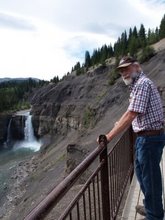
Critical Watershed Under Stress
The Medicine River Watershed is experiencing significant environmental stress as of August 21, 2025, primarily driven by an unprecedented nine-year drought period that has fundamentally altered the watershed's hydrology and ecosystem health. This prolonged drought, combined with increasing industrial water demands, has created conditions requiring urgent attention from government, industry, and communities.rdnewsnow+2
Current Hydrological Conditions
Water Levels and Flow
The Medicine River near Eckville (station 05CC007) shows current water levels at 1.758 metres as of August 21, 2025, with discharge measurements indicating approximately 1.51 cubic metres per second based on the most recent measurement. The river system, characterized by its extremely low gradient (0.019%) over 400 kilometers, functions more like "a long skinny lake with almost no flow" than a traditional river.medicineriverwatershed+1
The Red Deer River basin, of which the Medicine River is a significant tributary, remains classified at Stage 3 (severe drought) in Alberta's drought response system, though some recovery has been observed following precipitation events in July and August 2025. Despite recent rains that have helped other river systems in the region, the Medicine River watershed continues to face challenges due to its unique hydrological characteristics.alberta+1
Precipitation and Drought Context
The watershed has not exceeded annual mean precipitation since 2016, marking nine consecutive years of below-normal moisture conditions. While some areas of Alberta received significant rainfall in July 2025, with Calgary recording half a year's worth of precipitation in just over a month, the benefits to the Medicine River system have been limited due to its dependence on springs and surface runoff rather than snowmelt.lacombeexpress+2
Water Quality Assessment
Recent Monitoring Results
The most comprehensive water quality data from 2024 shows mixed results compared to previous years. Key findings include:creekwatch
| Parameter | 2024 Median | 2023 Median | Change |
|---|---|---|---|
| Dissolved Oxygen | 9.8 mg/L | 8.0 mg/L | Improvedcreekwatch |
| Water Temperature | 16.0°C | 14.8°C | +1.2°C increasecreekwatch |
| Turbidity | 10 NTU | 10 NTU | Stablecreekwatch |
| pH | 8.1 | 8.0 | Stablecreekwatch |
| Ammonia Nitrogen | 0.13 mg/L | 0.25 mg/L | Improvedcreekwatch |
| Phosphorus | 0.01 mg/L | 0.02 mg/L | Improvedcreekwatch |
| Chloride | 15 mg/L | 23 mg/L | Improvedcreekwatch |
While several parameters showed improvement, the significant 1.2°C increase in median water temperature is concerning and aligns with broader drought impacts. The 2024 sampling results from 25 events (reduced from 29 in 2023) show the river "stressed" with dissolved oxygen levels too low and temperatures too high during certain periods.945rewindradio+1
Long-term Water Quality Trends
Testing conducted by the Medicine River Watershed Society in partnership with the Red Deer River Watershed Alliance shows substantial improvement since 2007, when the river "failed everything" in water quality assessments. The continued monitoring program, now in its third year, demonstrates that while the river is generally in "good health," occasional findings of high nutrient concentrations and low dissolved oxygen levels indicate ongoing vulnerability.stettlerindependent+1
Industrial Pressures and Water Allocation
Fracking Water Consumption
A critical stressor on the watershed is the dramatically increased water consumption by the oil and gas industry for hydraulic fracturing. County officials report that "the amount of pumping that is going on is far beyond what anyone has ever seen". This water use is particularly concerning because fracking water is permanently removed from the water cycle—it cannot be returned to the environment even after treatment.thenarwhal+1
The Medicine River Watershed Society has documented increasing industrial water demands during the drought period, noting that water licenses continue to be issued while dugouts and water sources are declining. The society has initiated advocacy efforts calling for a phase-out of freshwater use for fracking, beginning with designated Water Short Areas.pipestoneflyer+2
Water Management Challenges
Current instream objectives for the Medicine River system are:
-
Upstream of Lasthill Creek confluence: 0.093 m³/s minimum flow
-
Downstream of Lasthill Creek confluence: 0.187 m³/s minimum flowblindmanriver
These thresholds are monitored using the Medicine River near Eckville (05CC007) hydrometric station, with water extraction licenses required to maintain sufficient flow to meet downstream demands and ecological needs.blindmanriver
Community and Governance Response
Multi-County Collaboration
Four central Alberta counties—Clearwater, Lacombe, Ponoka, and Red Deer—have joined forces to advocate for the Medicine River Watershed, recognizing the regional nature of the crisis. This collaboration represents a significant escalation in local government engagement with watershed protection.rdnewsnow+1
Scientific and Monitoring Initiatives
The Medicine River Watershed Society (MRWS) continues comprehensive monitoring through partnerships with CreekWatch and the Red Deer River Watershed Alliance. The society has expanded its activities in 2025 to include:medicineriverwatershed+1
-
Advocacy campaigns targeting provincial ministers and MLAsmedicineriverwatershed
-
Public education through plein air painting events and community presentationsmedicineriverwatershed
-
Collaboration with the newly formed Friends of the Blindman River organizationrdrwa
Groundwater Research
A significant development is Alberta Innovates' three-year, $3.8-million Southern Alberta Groundwater Evaluation launched in 2025, which will map groundwater quality, quantity, and location in the South Saskatchewan River basin, including areas affecting the Medicine River watershed.thealbertan
Environmental and Ecological Impacts
Aquatic Ecosystem Stress
The combination of drought conditions, elevated water temperatures, and industrial water extraction has created challenging conditions for aquatic life. While invasive Prussian carp have been documented in the system, concerns remain about the viability of native fish species during periods of low dissolved oxygen.castoradvance+1
The river's distinctive brown coloration, previously a concern, has been determined to result from the extremely slow flow rate rather than contamination, as water samples test clear.castoradvance
Riparian and Terrestrial Impacts
Paul McLaughlin, Ponoka County Reeve and professional biologist, notes that "areas near where he lives that used to be relatively wet are no longer so," indicating broader landscape-level changes in the watershed. Farmers report significantly lowered dugout levels, requiring substantial precipitation to recharge local water systems.lacombeexpress
Future Outlook and Recommendations
Immediate Concerns
The watershed faces several converging challenges that require immediate attention:
-
Continued drought conditions with no indication of return to historical precipitation patterns
-
Increasing industrial water demands during a period of declining supply
-
Rising water temperatures affecting ecosystem health
-
Inadequate regulatory framework for managing competing water demands
Strategic Recommendations
Based on current conditions and stakeholder input, key recommendations include:
-
Enhanced water allocation review considering ecological base flows before issuing new licenseslacombeexpress
-
Alternative water sources for fracking to reduce pressure on freshwater systemsreddeeradvocate+1
-
Expanded monitoring programs to better understand drought impacts and recovery patternsstettlerindependent
-
Regional water management planning that addresses the watershed-scale nature of the challenges945rewindradio+1
Conclusion
The Medicine River Watershed as of August 21, 2025, represents a critical case study in climate adaptation and water resource management. While recent monitoring shows some improvements in water quality parameters, the fundamental challenge of a nine-year drought combined with increasing industrial demands has created an urgent situation requiring coordinated response from all levels of government, industry, and communities. The collaborative efforts of local counties and watershed organizations demonstrate growing recognition that traditional approaches to water management may be insufficient for the challenges ahead.
The watershed's future depends on immediate action to address water allocation policies, reduce freshwater consumption by industry, and implement adaptive management strategies that can function within the new hydrological reality created by extended drought conditions.
- https://rdnewsnow.com/2025/07/26/central-alberta-join-forced-to-protect-medicine-river-watershed/
- https://www.lacombeexpress.com/home2/concerns-raised-over-fracking-impact-in-the-midst-of-dry-regional-conditions-8160228
- https://945rewindradio.ca/2025/07/24/clearwater-county-joins-forces-to-protect-medicine-river-watershed/
- https://medicineriverwatershed.ca
- https://creekwatch.ca/wp-content/uploads/2025/03/2024-Medicine-River-Water-Quality-Data.pdf
- https://www.alberta.ca/drought-current-conditions
- https://www.albertafarmexpress.ca/news/alberta-releases-updated-drought-response-plan/
- https://www.ctvnews.ca/calgary/article/calgary-has-recorded-half-a-years-worth-of-precipitation-since-june-20/
- https://www.stettlerindependent.com/local-news/water-sampling-shows-medicine-river-healthy-7340443
- https://www.castoradvance.com/local-news/water-sampling-shows-medicine-river-healthy-7340443
- https://thenarwhal.ca/alberta-drought-fracking/
- https://www.pipestoneflyer.ca/home2/central-alberta-river-groups-call-for-fracking-changes-8084924
- https://www.reddeeradvocate.com/home/central-alberta-river-groups-call-for-fracking-changes-8084924
- https://blindmanriver.ca/wp-content/uploads/2025/02/Follow-up-Questions-for-the-AER-Final-Feb-18-2025-1.pdf
- https://medicineriverwatershed.ca/activities/
- https://rdrwa.ca/2025/04/15/medicine-river-blindman-river-update-sessions/
- https://www.thealbertan.com/beyond-local/groundwater-eyed-to-help-meet-southern-albertas-water-needs-10145220
- https://wsask.ca/recreation-environment/provincial-forecast/
- https://www.landstewardship.org/news-stories/stories/post/stewardship-showcase-when-the-watershed-is-your-home
- https://waterdata.usgs.gov/monitoring-location/06091700/
- https://chatnewstoday.ca/2025/06/06/city-of-medicine-hat-urging-water-conservation/
- https://wateroffice.ec.gc.ca/report/data_availability_e.html?type=historical&station=05CC007¶meter_type=Flow+and+Level
- https://agriculture.canada.ca/en/agricultural-production/weather/canadian-drought-monitor/current-drought-conditions
- https://comtv.ca/news/2025/8/14/river-report-14-record-june-lows-turn-to-above-average-flows-as-precipitation-hits-region
- https://www.lacombeexpress.com/home2/central-alberta-river-groups-call-for-fracking-changes-8084924
- https://waterportal.ca/event-detail/2025-rdrwa-spring-forum-ab/
- https://www.medicinehat.ca/en/home-property-and-utilities/water-conservation.aspx
- https://rdrwa.ca/drought-flood/
- https://www.aref.ab.ca/news/source-waters-a-spotlight-on-the-red-deer-river-watershed
- https://waterdata.usgs.gov/monitoring-location/06092000/
- https://www.albertaparks.ca/albertaparks-ca/advisories-public-safety/
- https://wateroffice.ec.gc.ca/report/data_availability_e.html?type=historical&station=05AJ001¶meter_type=Flow+and+Level
- https://www.battleriverwatershed.ca/drought-update/
- https://waterdata.usgs.gov/monitoring-location/06630465/
- https://www2.gov.bc.ca/gov/content/environment/air-land-water/water/water-science-data/water-data-tools/provincial-hydrology-program/canada-british-columbia-hydrometric-program
- https://highriver.ca/news/stay-informed-annual-river-monitoring-begins-in-high-river
- https://wateroffice.ec.gc.ca/search/real_time_e.html
- https://highriver.ca/community/fire-protective-services/emergency-management/annual-river-monitoring
- https://apps.apple.com/ca/app/alberta-rivers/id888325071
- https://wateroffice.ec.gc.ca/mainmenu/real_time_data_index_e.html
- https://wateroffice.ec.gc.ca/report/real_time_e.html?mode=Graph&type=realTime&prm1=47&prm2=16&stn=05CC007
- https://www.alberta.ca/system/files/epa-draft-red-deer-county-markerville-flood-study-details-2025.pdf
- https://creekwatch.ca/wp-content/uploads/2024/03/2023-Medicine-River-Water-Quality-Data.pdf
- https://www.alberta.ca/ardley-reservoir-scoping-and-feasibility-study
- https://pmc.ncbi.nlm.nih.gov/articles/PMC11878928/
- https://www.reddeeradvocate.com/home/medicine-river-water-sampling-underway-7424730
- http://rdrmug.ca/wp-content/uploads/2012/12/Water-Assurance-Study-Final-Copy.pdf
- https://rdrwa.ca/2022/06/22/local-watershed-stewardship-group-launches-new-water-quality-testing-program/
- https://agriculture.canada.ca/en/agricultural-production/weather/national-agroclimate-risk-report
- https://chatnewstoday.ca/2023/09/29/south-saskatchewan-river-part-of-provincial-water-shortage-advisory/
- https://acis.alberta.ca
- https://www.seed.ab.ca/major-water-sharing-agreements-are-ready-as-drought-looms-says-province/
- https://www.sac-isc.gc.ca/eng/1562856509704/1562856530304
- https://climatedata.ca/download/
- https://oldmanwatershed.ca/abwater
- https://climate.weather.gc.ca


No comments:
Post a Comment