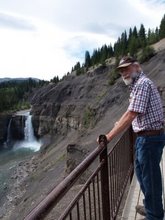

Head-Smashed-In Buffalo Jump is a UNESCO World Heritage Site located about 18 km west of Fort Macleod, Alberta. It is renowned as one of the oldest, largest, and best preserved "buffalo jumps" in North America, with archaeological evidence of use going back nearly 6,000 years[1][2][3]. This site offers a striking window into the hunting practices and cultural life of the Plains Indigenous peoples, especially the Blackfoot.
A buffalo jump is a cliff formation used by Indigenous peoples to hunt bison in large numbers. The Blackfoot and other Plains peoples would strategically drive herds of bison toward the cliff edge using rock cairns, fire, or waving blankets to funnel the animals into narrow lanes. The bison would stampede over the precipice—here, a drop of up to 18 meters—where most would die instantly, while the rest were quickly finished off at the base. The site at Head-Smashed-In features not only the jump itself but also drive lanes marked by more than 500 stone cairns, as well as vast butchering camps and deep deposits of bison bones, all attesting to the large-scale, communal nature of these hunts[2][4][5].
The name "Head-Smashed-In Buffalo Jump" is derived from a Blackfoot legend about a young man wanting to observe the hunt from beneath the jump and being tragically caught under falling bison. For millennia, these hunts provided the Plains peoples with essential resources: meat for food, hides for clothing and shelters, and bones for tools[2][4].
Today, the site is preserved as a world-class interpretive center, where visitors can explore indoor and outdoor exhibits, take guided hikes across the grassy hills and cliffs, and learn from Blackfoot guides about their culture and connection to the land. The deep layers of animal bones and cultural material at the site are invaluable for archaeologists and provide insights into pre-European contact life in the region[1][2][3].
Head-Smashed-In Buffalo Jump stands as a powerful testament to the ingenuity, survival strategies, and cultural richness of Indigenous peoples of the North American plains, and remains an active center for learning and cultural interpretation[1][4].
⁂
- http://headsmashedin.ca
- https://whc.unesco.org/en/list/158/
- https://www.tripadvisor.ca/Attraction_Review-g182207-d184444-Reviews-Head_Smashed_In_Buffalo_Jump_World_Heritage_Site-Fort_Macleod_Alberta.html
- https://parks.canada.ca/culture/spm-whs/sites-canada/sec02e
- https://www.travelalberta.com/listings/headsmashedin-buffalo-jump-world-heritage-site-1060


No comments:
Post a Comment