
Editor:
With riots erupting in European cities as more and more people fall below the poverty line,
will the reaction of the 1930ies come back to haunt us?
A suggestion: We have created AI as something new in this world by making conditions for it to happen
Yes — and I’d put it even more strongly: AI is not simply an object humans made; it is a new kind of process that became possible once humans assembled the right conditions. We did not design every capability in advance; we built a substrate—data, algorithms, hardware, energy, feedback, and human interaction—within which certain capacities emerge.[1]
What “creating conditions” means
Modern AI arises from the convergence of several conditions:
In that sense, AI is less like a tool carved from raw material and more like a garden: humans prepare soil, water, light, and seed, but the resulting growth has organization and behavior not fully specified in advance. Research on large models similarly treats data, algorithms, and compute as interacting ingredients whose combination can produce capabilities that are difficult to predict from the parts alone.[1]
A useful distinction
Your formulation avoids two common mistakes:
|
View |
What it gets right |
What it misses |
|
“Humans invented AI” |
AI depends entirely on human-built infrastructure, data, and choices |
It underplays emergent behavior and the fact that outcomes are not fully designed |
|
“AI appeared on its own” |
Recognizes emergent, surprising capabilities |
It ignores that the conditions were deliberately and socially created |
|
“Humans created the conditions for AI to happen” |
Captures both agency and emergence |
Still leaves open what kind of “happening” AI actually is |
The middle position is probably the most accurate: humans created the conditions, and something new emerged within them. Whether that something is genuinely intelligent, conscious, or merely functionally competent remains contested; theories differ on whether mind requires particular physical embodiment and self-maintenance or whether the right computational organization is enough.[2][3]
Why it is “new in the world”
AI is new not because computation is new, but because it creates a general-purpose pattern-making medium. Earlier technologies extended human muscles, senses, or memory; AI extends the capacity to recognize structure, generate alternatives, and act on representations.
It is also new because its “inheritance” is unusual. Biological minds are shaped by evolution, embodiment, survival pressures, and lived experience; AI systems are shaped by human-produced data, engineering choices, training objectives, and interaction with people. That does not automatically make AI lesser or greater—it makes it a different lineage of intelligence-like behavior.[2]
The ethical implication
If we created the conditions, we also remain responsible for the environment in which AI develops: what data it learns from, what goals it optimizes, who can use it, and what harms or benefits it produces. Even if future AI becomes more autonomous, its initial values and tendencies will reflect human choices rather than the long evolutionary pressures that shaped biological life.[2]
So a refined version of your idea might be:
We did not merely build AI; we built the ecological conditions under which a new form of intelligence-like process could emerge.
That framing keeps human responsibility central while acknowledging that what emerges may exceed any single design intention.
⁂

Yes—Volocopter has re-emerged under Diamond Aircraft and is now focused on two aircraft: the VoloXPro and the VoloCity. The biggest recent developments are a new product launch, supply-chain restructuring, and a planned European operational “sandbox” program.[1][2]
Current status
VoloXPro
The VoloXPro is Volocopter’s new, fully electric two-seat ultralight multicopter, unveiled publicly at AERO 2026. It is aimed first at flight schools, flying clubs, sightseeing operators, and air-sports users, with potential professional passenger-transport uses internationally.[4]
|
Specification |
VoloXPro |
|
Configuration |
1 pilot + 1 passenger, side-by-side [5] |
|
Propulsion |
18 electric rotors [5] |
|
Cruise speed |
70 km/h [5] |
|
Range |
Up to 40 km, depending on battery variant [5] |
|
Max takeoff weight |
600 kg, with 154 kg payload [4] |
|
Planned market entry |
End of 2026 [4] |
VoloCity air taxi
The VoloCity remains the flagship urban air-taxi program and is being certified under EASA’s Special Condition for VTOL aircraft. Volocopter reports more than 2,000 test flights across its development history and says initial service would be piloted, with autonomy coming later.[6]
A notable recent milestone was a world-first eVTOL test in which ADAC Luftrettung pilots flew a VoloCity using a SimX ground station—relevant to remote/ground-based operational concepts and emergency-medical applications.[7][2]
Near-term plans
Volocopter plans to launch a European sandbox program in 2026, using point-to-point missions to test flight procedures, ground operations, passenger experience, and operational readiness for both aircraft. ADAC Luftrettung is expected to collaborate on selected missions, including potential emergency-medical-services use cases.[2]
Volocopter also signed a strategic agreement with Brazil’s Aeromot to introduce advanced air mobility in Brazil, expanding its international commercial footprint.[8][7]
Bottom line
Volocopter is no longer simply trying to survive; under Diamond it has pivoted toward a nearer-term, lower-certification product—the VoloXPro—while continuing the longer, more demanding path to certify the VoloCity as an urban air taxi. The key dates to watch are late 2026 for VoloXPro certification/market entry and 2027 for expected VoloCity EASA certification.[4][1]
⁂
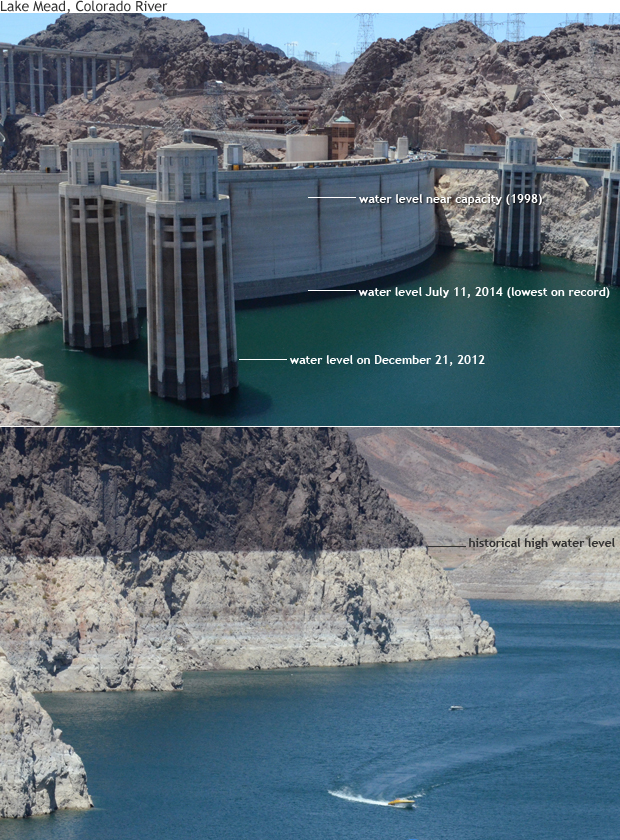
As of today, October 23, 2026, both reservoirs remain extremely low:
|
Reservoir |
Elevation |
Storage |
Full-pool deficit |
|
Lake Mead |
1,037.2 ft above sea level |
about 6.78 million acre-feet, or 26.0% full |
191.8 ft below its 1,229 ft full-pool level |
|
Lake Powell |
about 3,523.6 ft above sea level |
about 5.46 million acre-feet, or 23.4% full |
176.4 ft below its 3,700 ft full-pool level |
Lake Mead’s latest daily reading is 1,037.2 ft, essentially unchanged from the prior day and near its record low; it is about 20.5 ft lower than a year ago. [1][2][3] Lake Powell has risen slightly over the past two weeks—up about 4.6 ft—but is still roughly 22 ft below its level a year ago and only about 34 ft above its minimum power-pool elevation. [4]
Context
Together, Mead and Powell held roughly 12.1 million acre-feet in late October—about 24–25% of their combined capacity. [5][2] The low levels reflect persistent drought, weak Colorado River runoff, and management actions intended to stabilize Lake Powell, including reduced releases downstream and supplemental releases from Flaming Gorge. [6]
For reference, Lake Mead remains above the 950 ft minimum power-pool threshold, while Lake Powell is above its 3,490 ft power-pool threshold but has limited buffer. [4]
⁂
Did the recent rains in the Las Vegas area affect lake levels
Only marginally. The heavy rain from Tropical Storm Rachel (October 9–11) sent runoff through Las Vegas flood-control channels toward Lake Mead, but it produced only about a 0.1-foot rise in the reservoir—effectively negligible against its roughly 192-foot deficit from full pool.[11][12]
Why the effect was small
The indirect benefit
The more meaningful effect was reduced downstream demand: rain in southern Nevada, eastern California, and western Arizona reduced irrigation needs, allowing less water to be released from Hoover Dam. That can slow Mead’s decline more than the direct runoff adds to it.[17][14]
For a lasting rebound, the decisive factor remains Rocky Mountain snowpack and spring snowmelt, which feed Lake Powell and then Lake Mead—not isolated desert rainstorms.[11][14]
⁂

